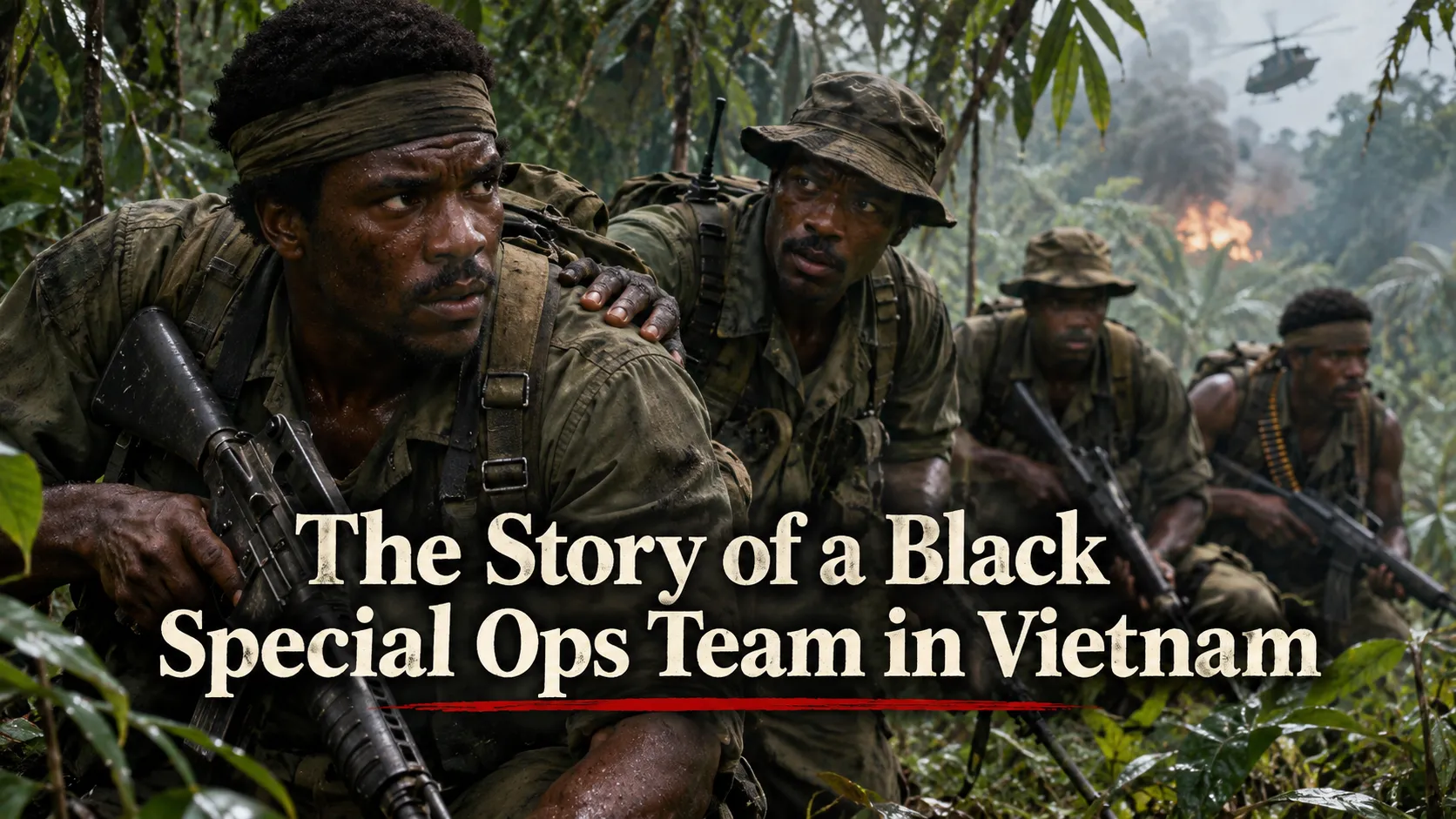
J.M. Harper’s Soul Patrol (2026) dives into a relatively uncharted territory in the history of the U.S. military. It gives us an in-depth analysis of the first Black special operations unit in the Vietnam War.
It has been more than 50 years since the end of the Vietnam War, and some of the remaining members of the unit are reuniting to talk about the traumas they endured from that era. They endured traumas from combat as well as from the discrimination they suffered while serving their country.
Harper finds a story that is almost completely ignored in the official versions of the Vietnam War with his use of old photos, newsreels, home movies, and other documents.
The film won the U.S. Documentary Directing Award at the Sundance Film Festival.
What Is Soul Patrol About?
The film is about the members of Company F, 51st Infantry, during the Vietnam War.
Their unit performed dangerous long-range recon patrols. Some of their missions were similar to special operations in that they relied on small teams to go into enemy occupied territory. There were various ways the teams could be split up and redirected. Teammates had to depend on one another.
The units members have reunited decades later to discuss what they endured and what effect those experiences had on their lives.
The conversations in the film touch on many traumas: emotional trauma, loss, and psychological trauma.
The film takes on some of the paradoxes concerning their military service. While some of these men were serving and fighting in Vietnam, other African-Americans were battling for their civil rights in the U.S.
The documentary uses a veteran reunion to study the impact of the military and racism on a person’s view of citizenship and freedom.
The documentary draws on the testimony of Ed Emanuel, a member of the unit, and the author of the memoir that inspired the documentary. He later documented his war experience.
Other soldiers connected with the project are Thad Givens, Lawton Mackey Jr., Willie Brown, John Willis and Norman Reid.
Their war stories cover the same historical period with varying degrees of detail.
The men joined the military during a period of widespread social and political changes.
The men were preparing to go to war during the American Civil Rights movement.
The uncertain and ominous climate of the time was also caused by the assassinations of Martin Luther King Jr. and Robert F. Kennedy.
For people doing research on the Soul Patrol project, the veterans testify to and explain the historical gaps and omissions about the war.
The veterans are the main and only source of historical information presented in the documentary.
J.M. Harper wrote, directed and produced the movie. He has produced, written and directed other films that look at the intersection of the criminal justice system and the African-American Community. For Soul Patrol, he worked with a team of producers, Sam Bisbee, Danielle Massie, Nasir Jones and Peter Bittenbender. Nasir Jones is also known as Nas, the famous and talented Hip-Hop Artist. The documentary was produced by Park Pictures and other Documentary funds.
Logan Triplett was the cinematographer.
The editing team was led by Byron Leon, Niles Howard and Gabriela Tessitore.
Harper’s methodology blends interviews with other sources to provide a different representation of veterans.
This methodology provided the audience with an opportunity to learn about the experiences of the veterans and hear their post-war thoughts.
Personal archival recordings are one of the signature methods of presentation in the film.
Rarely has Super 8 film from the war been integrated into a documentary.
These film clips, along with the photographs, audio recordings and news clips of the time, provide a connection to the veterans’ memories and to the history of the times.
Reenactments are used to fill the gaps of history.
Together, they provide an account anchored in the veterans’ experiences.
Reenactments should be appreciated for what they represent, that is, a filmmaker’s interpretation of history rather than actual documentary film footage.
There is a mixture of methods for presenting history, and the strongest and most innovative are found in the personal archival materials of the veterans.
They help preserve memories that might otherwise not be available to the public.
The documentary considers the paradox of fighting for American values while experiencing racism at home.
The soldiers of that time were part of the military conflict while the U.S. was addressing the Civil Rights issues.
After the War, there was still a need to address the issues of racism in their communities.
The documentary also examines the emotional consequences of wars and military campaigns.
Men remember perilous missions and lost comrades and continue to be haunted decades later by events that influenced the course of their lives.
The reunion allows them to bring up those painful memories in the presence of people who lived through similar events and helped them endure the hardships of war.
The documentary sees these conversations as helping individuals reflect and clarify as opposed to thinking that with one meeting, the individual will heal.
There seems to be no established connection between phrases like movie box old version apk download uptodown and the legal distribution of the documentary.
The 2026 Sundance Film Festival became a launching pad for the film, and the director was awarded the Directing Award in the U.S. Documentary Competition.
The film had its festival circuits at True/False, Full Frame, DC/DOX, and AFI FEST.
The documentary was picked up by Kino Lorber for North American distribution in May of 2026.
The theatrical release was scheduled for November in New York, Los Angeles, and Minneapolis.
It is over 100 minutes long.
The distributors are set to make it available digitally, on home video and for the education market.
It should be noted that phrases like moviebox pro app do not reflect legal distribution of the film.
For audiences interested in military history and documentary filmmaking, Soul Patrol offers a unique perspective of the Vietnam War. Most importantly, Soul Patrol keeps the voices of veterans alive and recognizes their courage, and the friendships and experiences they shared that have been neglected in the standard accounts of American military history.
Leave a Reply